
• Skip to content
  • Skip to primary sidebar

Header Right

  • Home
  • About
  • Contact

admin

Can’t Pay Your Income Taxes? Some Solutions

May 23, 2022 by admin

Two Businesswomen Meeting In OfficeDid you skip filing or request an extension on your 2021 taxes because you couldn’t pay? You have several options.

It’s happened to many people at one time or another. You wait until the last minute to prepare and file your income taxes, only to receive a very unpleasant surprise: You owe money, and you don’t have it to give. Even if you file for an extension, the IRS still expects you to send in what you estimate you’ll owe. If that’s absolutely impossible, you should always try to send in what you can.

The first thing you should do, of course, is to review your 1040 again. Did you take all of the credits and deductions that you should have? Or make any calculation errors? Did you somehow overstate your income?

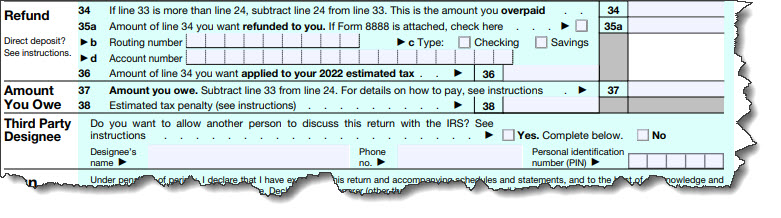
If after checking your return you still see that large number on line 37 (Amount you owe), try not to despair. And certainly, don’t neglect to file. Instead, take advantage of one of the many options you have.
tax tips

If you have to enter a big number on line 37 and you lack the funds to pay the IRS, there are several different steps you can take.

Try to Get a Loan

This is the best solution if it’s possible. Consider approaching family members who you know might have enough disposable income to help you out temporarily. If that’s not possible, check with your bank or credit union or online lenders. Paying interest may be more economical than dealing with IRS penalties and interest – and less harmful to your tax-paying history.

Set Up an Online Payment Plan

If you qualify (and most individual taxpayers do), you can set up an online payment plan through the IRS itself. You don’t have to contact the agency. It can all be done on the web. Once you’ve provided the required information, you’ll be notified immediately about your approval status. There are two types:

  • Short-term payment plan. This is designed for taxpayers who owe less than $100,000 and are going to repay it in 180 days or fewer. Keep in mind that the late-payment penalty and interest will continue to accrue, so those amounts have to be figured into your plan. There are no other fees for this.
  • Long-term payment plan. This is also known as an installment agreement, and it usually involves a setup fee, though low-income individuals might be able to have the fee waived or reimbursed. Your total debt to the IRS must be less than $50,000 (combined tax, interest, and penalties), and you’re required to make monthly payments. If you filed your return on time, your late-payment penalty will be reduced from up to 1 percent per month to 0.25 percent per month for as long as the installment agreement is in effect.

Offer in Compromise

It may be possible for you to settle your tax bill with the IRS and pay less than what you originally owed. There is a non-refundable fee of $200 that is generally waived for low-income taxpayers. You can see if you’re eligible by visiting this site and completing the multi-step questionnaire.

tax tips

You can use this IRS tool to see if you pre-qualify for an Offer in Compromise, which could reduce your tax bill

Delayed Collection

If you are absolutely unable to pay and the IRS can confirm this, the agency may delay collection until your finances improve. Call the number on your notice to request this action, or call (800) 829-1040. Interest and penalties will continue to accrue during the delay.

Penalty Relief

You may also be able to get your late-payment penalties reduced or eliminated if you have reasonable cause, as defined by the IRS. The agency decides whether you’re eligible for this on a case-by-case basis. If you have a solid history of compliance, the First Time Abatement program may be available to you.

Planning Ahead Helps

It’s good to know that there are options if you can’t come up with enough money to pay your tax bill, but you can probably avoid that situation if you do year-round tax planning. Looking at your income and expenses—especially the major ones—in terms of their effect on your taxes can go a long way toward avoiding surprises at filing time. Let us know if we can help you develop such a strategy.

Filed Under: Individual Tax

4 Tips on How Small Businesses Can Reduce Taxes

April 20, 2022 by admin

side profile of a businesswoman using a laptopAs a small business owner, tax liability is the money you owe the government when your business generates income. With changing laws and gray areas regarding deductions, exemptions, and credits, it’s no wonder small business owners rank taxes at the top of the list of the most stress-inducing aspect of business ownership. To reduce that stress, taxes shouldn’t be something to focus on only at year’s end. Use these tips on reducing your business tax year-round and see your taxes and stress level decrease!

1. Business structure

Your company’s business structure is how it is organized – it answers questions like who is in charge, how are profits distributed, and who is responsible for business debt. The most common business structures are:

  • Sole proprietorships have one owner who takes all profits as personal income. The owner is personally liable for any business debts.
  • Partnerships are structured like sole proprietorships but can have an unlimited number of owners.
  • C corporations have unlimited shareholders who each own part of the company. Profits are distributed as dividends between them. Owners are not personally liable for business debts.
  • S corporations are structured like C corporations, but the number of shareholders is capped at 100.

In addition to affecting how a business operates, business structure impacts how much a company pays in taxes. The U.S. tax code is complex and includes four main tax categories:

  • Income tax – paid on profits
  • Employment tax – employee Social Security and Medicare contributions
  • Self-employment tax – Social Security and Medicare contributions for self-employed individuals
  • Excise tax – special taxes for specific goods and services like tobacco, alcohol, etc.

IA sole proprietorship or partnership is a good idea for businesses wanting tax simplicity. For those with less than 100 owners, an S corporation might be the right fit and best tax option. Again, business structure and tax laws are complex and are best determined by a qualified, experienced accountant.

2. Net Earnings

Net earnings (i.e., net income or profit) is the gross business income minus business expenses. Regardless of the business, it begins with gross income (the income received directly by an individual, before any withholding, deductions, or taxes), and allowable expenses are deducted to arrive at net income. How this figure is calculated is dependent upon business structure.

Net earnings are used to calculate business income taxes. Again, the calculation process differs slightly for different business structures. It is best to seek a professional to help with net earnings calculations for the proper calculation and maximum legal deductions.

3. Employ a Family Member

One of the best ways for small business owners to reduce taxes is hiring a family member. The (IRS allows a variety of options for tax sheltering. For example, suppose you hire your child, as a small business owner. In that case, you will pay a lower marginal rate or eliminate the tax on the income paid to your child. Sole proprietorships are not required to pay Social Security and Medicare taxes on a child’s wages. They can also avoid Federal Unemployment Tax Act (FUTA) tax. Consult a trusted accounting professional for details about the benefits of hiring your children or even your spouse.

4. Retirement contributions

Employee retirement plans benefit employees, but they can also be good for your small business. Employer contributions to an employee retirement plan are tax-deductible. They can also carry an employer tax credit for setting up an employee retirement plan. Again, this is a task an accountant can handle for you. They can guide you on retirement plan choices based on your business’s situation, employees, and other factors.

As a small business owner, you can deduct contributions to a tax-qualified retirement account from your income taxes (except for Roth IRAs and Roth 401(k)s). Sole proprietors, members of a partnership, or LLC members can deduct from their personal income contributions to their retirement account.

As with any tax situation, consulting your trusted accounting professional is always best. They are up to date on the latest tax laws, information, and allowable deductions. By being aware of ways your small business can reduce taxes, you can bring these topics up with your accountant, discuss the best options for you, and be prepared long before tax time rolls around.


Contact our tax professionals to learn more about how you can control tax exposure for your small business.

Filed Under: Business Tax

Financial Analysis for Your Small Business

March 23, 2022 by admin

Comparing a business’s key financial ratios with industry standards and with its own past results can highlight trends and identify strengths and weaknesses in the business.

Financial statement information is most useful if owners and managers can use it to improve their company’s profitability, cash flow, and value. Getting the most mileage from financial statement data requires some analysis.

Ratio analysis looks at the relationships between key numbers on a company’s financial statements. After the ratios are calculated, they can be compared to industry standards — and the company’s past results, projections, and goals — to highlight trends and identify strengths and weaknesses.

The hypothetical situations that follow illustrate how ratio analysis can give company decision-makers valuable feedback.

Rising Sales, Rising Profits?

The recent increases in Company A’s sales figures have been impressive. But the owners aren’t certain that the additional revenues are being translated into profits. Net profit margin measures the proportion of each sales dollar that represents a profit after taking into account all expenses. If Company A’s margins aren’t holding up during growth periods, a hard look at overhead expenses may be in order.

Getting Paid

Company B extends credit to the majority of its customers. The firm keeps a close watch on outstanding accounts so that slow payers can be contacted. From a broader perspective, knowing the company’s average collection period would be useful. In general, the faster Company B can collect money from its customers, the better its cash flow will be. But Company B’s management should also be aware that if credit and collection policies are too restrictive, potential customers may decide to take their business elsewhere.

Inventory Management

Company C has several product lines. Inventory turnover measures the speed at which inventories are sold. A slow turnover ratio relative to industry standards may indicate that stock levels are excessive. The excess money tied up in inventories could be used for other purposes. Or it could be that inventories simply aren’t moving, and that could lead to cash problems. In contrast, a high turnover ratio is usually a good sign — unless quantities aren’t sufficient to fulfill customer orders in a timely way.

These are just examples of ratios that may be meaningful. Once key ratios are identified, they can be tracked on a regular basis.

Filed Under: Best Business Practices

Starting a Side Gig in 2022? Your New Tax Obligations

February 15, 2022 by admin

Tax wording on wooden cubes with US dollar coins and bag.It’s not just self-employed individuals who must pay estimated taxes. Here’s what you need to know.
W-2 income tax withholding isn’t perfect. You’ve probably had years when you owed more than you expected to on April 15. Or you were pleasantly surprised to receive a sizable refund. The idea, of course, is to try to come out as even as possible. You can usually do this by adjusting your withholding when you experience a life change like taking on a mortgage or having a baby.

Income taxes are also pay-as-you-go for self-employed individuals – or at least they should be. If you’re striking out on your own by starting your own small business in 2022 or you’re simply taking on a side gig to improve your finances, your tax obligation will change dramatically. Your income will not be subject to employer withholding every week or two. In most cases, you’ll get it all. But the IRS expects you to pay estimated taxes on that income four times a year.

Who Else Must Pay?

There are other situations where you’ll be expected to make quarterly payments. In fact, the only individuals who aren’t required to pay estimated taxes (besides W-2 employees whose withholding is on target) are those who meet all three of these conditions:

  • You owed no taxes the previous tax year (line 24 on your 2021 1040—total tax—is zero, or you weren’t required to file a return).
  • You were a resident alien or U.S. citizen for all of 2021.
  • Your 2021 tax year covered a 12-month period.

tax tips

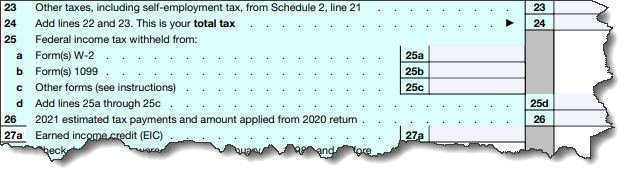
You’ll find your total tax for 2021 on line 24 of the Form 1040. Notice, too, that line 26 asks for 2021 estimated tax payments.

There are numerous situations where individuals who have payroll taxes regularly withheld on their income may still be required to submit quarterly estimated taxes. For example, did you receive income from rents or royalties? Dividends or interest? Income from selling an asset? Gambling?

If you have an employer who withholds taxes, but you don’t think you’ll be paying enough given the deductions and credits you might receive, you need to plan for estimated taxes. Self-employed individuals are almost always required to submit them.

Special Rules for Some

As with all things IRS, there are many exceptions to the rules regarding estimated taxes. For example, there are special rules for:

  • Fishermen and farmers.
  • Some household employers.
  • Certain high-income taxpayers.
  • Nonresident aliens.

How Do You Estimate Your Quarterly Taxes?

That’s the hard part, especially if you’re new to the world of estimated taxes. There is no magic formula, no way to calculate to the penny what you’ll owe. You’re basically making an educated guess. Since you won’t know for sure what changes to the tax code will be put in place until the end of the year, you can’t be absolutely certain that you might get a particular credit or deduction.

But you know roughly what your income will be for a given quarter once you’re nearing the end of it. Do you have a lot of business-related expenses? Keeping track of those is critical, as they’ll offset your income. If you don’t, you’ll have to budget for a heftier quarterly payment. And you must keep in mind that you’ll be paying self-employment tax – that portion of your income taxes that your employer used to pay.

Once you’ve been self-employed for a full tax year and have seen what your tax obligation was, it will be easier to estimate in subsequent years. But you may have a difficult time your first year.

How Do You Pay Estimated Taxes?

tax tips

Individuals and business that had to pay estimated taxes in 2021 submitted the Form 1040-ES four times. If you’re self-employed in 2022, you’ll need to submit similar vouchers with your payments, unless you’re paying online.

If you’re self-employed and you anticipate owing $1,000 or more in taxes on your 2022 income, you’ll need to file quarterlies using IRS Form 1040-ES vouchers (available on the IRS website) along with a check or money order. There are also ways to pay online using a credit or debit card or direct bank withdrawal. Corporations would file the Form 1120-W if they expect to owe $500 or more.

Estimated taxes for the 2022 tax year are due:

April 18, 2022 (January 1-March 31, 2022)

June 15, 2022 (April 1-May 31, 2022)

September 15, 2022 (June 1- August 31, 2022)

January 16, 2023 (September 1-December 31, 2022)

A Challenging Task

Estimated taxes are not precise. And it may be difficult to set aside money for them if your income is not where you’d like it to be. But as you might expect, the IRS will levy penalties on you if you don’t.

Year-round tax planning can help you in this critical area. We’ll be happy to set aside time to consult with you about estimated taxes. We’re also available to do tax preparation and to look at how your taxes fit into your overall financial situation. Contact us soon to get a jump on the 2022 tax season — or to finish up 2021.

Filed Under: Business Tax

Tax Planning Tips for Individuals

January 12, 2022 by admin

Businesswoman working at the officeYou may not think about taxes often, but they can prove to be a large expense. That’s why it’s important to make the most of any opportunities you may have to lower your tax liability. Here’s a look at some of the factors you may want to consider in your planning.

Standard Deduction or Itemizing

The Tax Cuts and Jobs Act (TCJA) contained many provisions that will be in place through the 2025 tax year. For example, there are significantly higher standard deductions for each filing status and various itemized deductions have been reduced or eliminated. As a result, many people who previously itemized are now better off taking the standard deduction. But don’t automatically rule out itemizing, especially if you expect to make a large charitable contribution or will have a lot of medical and dental expenses. By bunching these items in one tax year, to the extent possible, you may have enough to make itemizing worthwhile that year.

Home/Work Tax Breaks

If you are a traditional full-time employee and work from home, home office expenses are not deductible, even if you itemize. The deduction for unreimbursed employee business expenses (and various other miscellaneous expenses) won’t be restored until 2026. However, if you are a self-employed/gig worker, you may qualify to deduct your home office expenses. Certain requirements apply.

Moving Expenses

Work-related moving expenses may now be deducted only if you are an active-duty member of the Armed Forces and the move is per a military reassignment. This deduction is available whether you itemize or claim the standard deduction.

Health Savings Accounts (HSAs)

HSAs continue to offer tax breaks. If you are covered by a qualified high-deductible health plan and meet other requirements, you can contribute pretax income to an employer-sponsored HSA or make deductible contributions to an HSA you open on your own. An HSA can earn interest or be invested, growing in a tax-deferred manner similar to an individual retirement account (IRA). And HSA withdrawals for qualified medical expenses are tax free. You can also carry over a balance from year to year, allowing the account to grow.

Family Related Tax Credits

The TCJA expanded tax credits for families, doubling the child credit and adding a family credit for dependents who don’t qualify for the child credit. Credits include one for each child under age 17 at the end of the tax year (under age 18 for 2022) and another for each qualifying dependent who isn’t a qualifying child. The latter category includes an older dependent child or a dependent elderly parent.

The adoption credit and the income exclusion for employer adoption assistance are still in place. You’ll want to check into the details if you are adopting a child.

Section 529 Plans*

These tax-advantaged savings plans assist in paying for education. While initially used to pay for a college education, 529 plans may now cover elementary through high school education as well. Some states offer tax breaks for 529 plan contributions. However, contributions are not deductible on your federal return. Growth related to 529 contributions is tax deferred, and withdrawals for qualified education expenses — including elementary and secondary school tuition of up to $10,000 per year per student — are free of federal income taxes.

A special break allows you to front-load five years’ worth of gift tax annual exclusions and make up to a $80,000 contribution per beneficiary in one tax year free of federal gift tax. If you make the contribution with your spouse, the total can be extended to $160,000. (These limits may be inflation adjusted.)

Other Education Tax Breaks

As before, you may be able to take advantage of either the American Opportunity credit or the Lifetime Learning credit for higher education costs. The first credit can be up to $2,500 per student per year for the first four years of college. The second credit is limited to $2,000 per tax return and is available for qualified expenses of any post-high school education at an eligible educational institution, including graduate school.

In addition, if you are paying off your student loans, you may be able to deduct the interest, up to $2,500 per year. This deduction is available whether you claim the standard deduction or itemize.

Keep in mind that there are income limits for these tax breaks.

Investments

To help reduce the taxes you pay on investment gains in taxable accounts, you may want to consider:

  • Selling securities with unrealized losses before year end to offset realized capital gains.
  • Choosing mutual funds** with low portfolio turnover rates that tend to generate long-term capital gains, since the lower long-term rates offer a tax savings.
  • Factoring in that you can deduct only $3,000 of net capital losses per year against other income ($1,500 if you’re married filing separately), but you can carry forward excess losses to subsequent tax years.

You should also be aware that if you have modified adjusted gross income of over $200,000 ($250,000 if married filing jointly; $125,000 if married filing separately), you may owe a 3.8% “net investment income tax,” or NIIT.

Retirement

While the TCJA made only minimal changes in the area of retirement planning, there are still issues to consider. The main one is whether you want to pay taxes on your retirement account contributions later (when you eventually take distributions from your account) or pay taxes on them now (which means potentially tax-free distributions when you retire). It all depends on the type of savings vehicle you use.

Traditional 401(k), 403(b), and 457 plans and traditional IRAs allow you to save for retirement on a tax-deferred basis. Your employer may also choose to make contributions to your plan account. Salary deferrals to 401(k) and similar plans are generally pretax, while traditional IRA contributions are tax deductible under certain circumstances.

Roth alternatives – available in some employers’ 401(k), 403(b), and 457 plans, as well as through a Roth IRA you open on your own – provide no tax break on contributions. However, investment earnings accumulate tax deferred. And, when requirements are met, distributions from your account are tax free. Since Roth accounts in employer plans lack income restrictions, you may be able to make larger contributions to an employer’s Roth plan than to a Roth IRA.

As always, make sure that you obtain professional advice before making tax-related decisions. Your tax professional can provide detailed information and help you evaluate what might be appropriate for your personal tax situation.

Source/Disclaimer:

*Certain 529 plan benefits may not be available unless specific requirements (e.g., residency) are met. There also may be restrictions on the timing of distributions and how they may be used.Before investing, consider the investment objectives, risks, and charges and expenses associated with municipal fund securities. The issuer’s official statement contains more information about municipal fund securities, and you should read it carefully before investing.

**You should consider a fund’s investment objectives, charges, expenses, and risks carefully before you invest. The fund’s prospectus, which can be obtained from your financial representative, contains this and other information about the fund. Read the prospectus carefully before you invest or send money. Shares, when redeemed, may be worth more or less than their original cost.

This communication is not intended to be tax advice and should not be treated as such. Each individual’s tax circumstances are different. You should contact your tax professional to discuss your personal situation.

Filed Under: Individual Tax

8 QuickBooks Online Tips

December 20, 2021 by admin

There are always more things to learn about the applications we use every day. Here are some tips for expanding your use of QuickBooks Online.

We tend to fall into the same old patterns once we’ve learned how to make a computer application work for us. We learn the features we need and rarely venture beyond those unless we find we need the software or website to do more.

QuickBooks Online is no exception. It makes its capabilities known through an understandable system of menus and icons, labeled columns and fields, and links. But do we really see what else it can do? Expanding your knowledge about what QuickBooks Online can do may help you shave some time off your accounting tasks and better manage the forms, transactions, and reports that you work with every day. Here are some tips.

Edit lines in transactions. Have you ever been almost done with a transaction and realize you need to make some changes farther up in the list of line items? Don’t delete the transaction and start over. QuickBooks Online comes with simple editing tools, including:

  • Delete a line. Click the trash can icon to the right of the line.
  • Reorder lines. Click the icon to the left of the line, hold it, and guide it to the new position. This is tricky. You may have to work with it a bit.
  • Clear all lines and Add lines. Click the buttons below your line items, to the left.

Explore the More menu. Saved transactions in QuickBooks Online have a link at the bottom of the screen labeled More, as pictured above. Click it, and you can Copy the transaction or Void or Delete it. You can also view the Transaction journal, which displays the behind-the-scenes accounting work, and see an Audit history, which lists any actions taken on the transaction.

Create new tabs. Do you ever wish you could display more than one screen simultaneously so you can flip back and forth between them? You can. Right click on any link in QuickBooks Online, like Sales | Customers, and select Open link in new tab.

Use keyboard shortcuts. Not everyone is a fan of these, mostly because they can’t remember them. Hold down these three keys together to see a list: Ctrl+Alt+?. Some common ones include those for invoices (Ctrl+Alt+i) and for expenses (Ctrl+Alt+x).

Modify your sales forms. Do you need more flexibility than what’s offered in your sales forms? It may be there. Click the gear icon in the upper right and select Account and settings under Your Company. Click the Sales tab. In the section labeled Sales form content, notice that you can add fields for Shipping, Discounts, and Deposits by clicking on their on/off switches. You can also add Custom fields and Custom transaction numbers.

Add attachments. Sometimes it’s helpful to have a copy of a source document when you enter a transaction. To attach a receipt to an expense, for example, look in the lower left corner of the transaction. Click Attachments and browse your system folders to find the file, then double click on it.

Record expenses made with credit cards. Who doesn’t use credit cards for expenses sometimes? You can track these purchases in QuickBooks Online, as pictured above. Click the gear icon in the upper right and select Chart of Accounts under Your Company, then click New in the upper right. Select Credit Card from the drop-down list under Account Type. Enter Owner Purchase in the Name field and then Save and Close. When you create an expense, select Owner Purchase as the Payment account.

Previous Transaction Button. Are you trying to find a transaction that you entered recently but don’t want to do a full-on search? With a transaction of the same type open, click the clock icon in the top left corner. A list of Recent Expenses will drop down. Click on the one you want.

Whether you’re new to QuickBooks Online or you’ve been using it for years, there’s always more to explore. We’d be happy to help you expand your use of QuickBooks Online by introducing you to new features, building on what you’re already doing on the site to improve your overall financial management. Call us to schedule some time.

Filed Under: QuickBooks

  • « Previous Page
  • Page 1
  • …
  • Page 6
  • Page 7
  • Page 8
  • Page 9
  • Page 10
  • …
  • Page 12
  • Next Page »

Primary Sidebar

Search

Archives

  • January 2026
  • December 2025
  • November 2025
  • October 2025
  • September 2025
  • August 2025
  • July 2025
  • June 2025
  • May 2025
  • April 2025
  • March 2025
  • February 2025
  • January 2025
  • December 2024
  • November 2024
  • October 2024
  • September 2024
  • August 2024
  • July 2024
  • June 2024
  • May 2024
  • April 2024
  • March 2024
  • February 2024
  • January 2024
  • December 2023
  • November 2023
  • October 2023
  • September 2023
  • August 2023
  • July 2023
  • June 2023
  • March 2023
  • February 2023
  • January 2023
  • December 2022
  • November 2022
  • October 2022
  • September 2022
  • August 2022
  • July 2022
  • June 2022
  • May 2022
  • April 2022
  • March 2022
  • February 2022
  • January 2022
  • December 2021
  • November 2021
  • October 2021
  • September 2021
  • August 2021
  • July 2021
  • June 2021
  • May 2021
  • April 2021
  • March 2021
  • February 2021
  • January 2021
  • December 2020
  • November 2020
  • October 2020
  • September 2020
  • August 2020
  • July 2020
  • June 2020
  • May 2020
  • April 2020
  • March 2020
  • February 2020

Categories

  • Best Business Practices
  • Business Tax
  • Estate and Trusts
  • Individual Tax
  • Investment
  • QuickBooks
  • Real Estate Tax
  • Retirement

Copyright © 2021 · https://www.rkncpa.com/blog